
Apr 25, 2017 | Emotional Wellbeing, Health, Real Life Stories, testimonial, Trauma, TRE
Life starts throwing things at us from when we are small – and we learn to navigate, deal with, overcome or stuff them.
Regardless, they have an impact on us, and so many parents find that ‘parenting’ brings many of these unresolved experiences and tensions to the surface. Being with an anxious parent always has an impact on children.
I am so proud of this Mum who trusted me enough to take me up on my suggestion she try learning TRE.
In just a few sessions she felt and LOOKED so different!
In her own words though…

My journey started with Claire in January 2017.
I’ve always suffered with bouts of anxiety throughout my life,
usually when the stresses of life, illness, loss, family, work, etc, become hard to deal with.
Over a number of weeks I’ve tried to fix everything, everyone and myself when this happens.
But sometimes you can’t! and that’s when I’m in trouble.
So you try to hide it, carry on, and store these feelings.
In the past I have had to go to the doctors.
But this time I met Claire, and decided to try TRE.
I suppose at first I was unsure about it, skeptical, not quite sure whether it would help.
But after 2 sessions I started to understand it and feel the benefits in my own body.
I started to release underlying tension, stress, thoughts, aches and pains, that I’d tucked away for a long time.
My body and my mind feel so much better,
relaxed muscles, neck pain gone, and even foot pain (from Plantar Fasciitis) getting better
and my mind doesn’t worry so much.
I suppose I concentrate more in today rather than what might happen.
I practice TRE at home now 3 times a week, and it does work.
I would like to thank Claire for her time, patience, and helping me heal myself.
We all have these times in our life, TRE helps so much, the natural way.
Thank you x
TRE is a powerful tool being used across the world to help people of all ages release tension from their bodies.
If you would like to find out more you can explore the TRE section on this site and search the TRE blogs in categories on the right hand side. 🙂

Mar 22, 2017 | Children, Emotional Wellbeing, Health, Resources, School, Sleep, Uncategorized
Many, many children go through a stage in their development when they don’t like going to bed, and the reasons can be many and varied.
Parents often tell me their children are generally fine and ‘the behaviour’ only begins when it is time to start the bedtime routine.
One dad I spoke to described in detail the battle that ensued between him and his daughter. Her delaying tactics were many and varied (and quite standard repertoire); refusing to go up the stairs; refusing to get into bed; distraction techniques; food requests; drink requests and refusing to sleep without the light on.
He was annoyed that it was such a palava and cross that she wouldn’t just do what she was told and go to bed/sleep.
I have had this same conversation many times with mums too, over the years.
When I asked him why his daughter didn’t like going to bed, he looked at me blankly.
It was a question he didn’t have the answer to.
He had never stopped to find out.
 Like so many parents, he was getting sucked into the ‘bed-time-battle’, thinking that this un-cooperative child was the foe to be avenged, for the prize of a quiet evening and some child-free time.
This picture is so common it is scary.
Scary? Because it means there are so many children resisting going to bed for reasons only they know. If no one else knows then they are not being understood and not being helped emotionally or practically, they are alone with the thing that is the REAL enemy. Their real challenge.
Solutions and sleep come quicker when parents and children join forces and work together.
I’m sure you have noticed, but the middle of a battle of wills between an adult and child is never a good time to ask the child what they are scared of. If they know you are already wound up (and angry with them) then they will not feel safe to tell you the truth about their anxiety.
 Much better progress can be made if this conversation happens at a time when both adult and child are calm and doing something else together and bedtime is not imminent.
Want to know exactly what to say and how to say it,
to get the breakthrough you both need?
CLICK THIS BOX and get your free version of the script I give to parents.
Communiction Cues to End Bed-Time Battles. Get FREE download here
If you get to the point where your child actually tells you what is bothering them, then YOU MUST UNDERSTAND how brave they have been to tell you. At this point there is one MAJOR MISTAKE parents often make.
MISTAKE: Tell the child there is nothing to be scared of.
Remember your child plucked up all their courage to risk telling you what scares them (if they had found it easy to tell you in the first place you wouldn’t have had weeks or months of bed time battle) and now you are telling them they are wrong or stupid to be scared about that. This leaves children feeling wrong, stupid and still scared – as no one stopped being scared about something just by being told to not be scared. What TO say and do is coming soon in another post. For now just make sure you STOP and LISTEN and really HEAR them and try to imagine what it might feel like for them to have had this fear they have carried on their own and getting lots of anger from you because they couldn’t handle it alone.
Communiction Cues to End Bed-Time Battles. Get FREE download here
Previous Blogs in this Sleep Series
Sleep 101 – Essential Foundations for Good Quality Sleep
Sleep 301 and 401 coming soon!

Mar 17, 2017 | Children, Emotional Wellbeing, Food, Health, School, Sleep, Trauma, Uncategorized
Last week there was a documentary on British TV about children and sleep; a crisis hitting our younger generation.
I’m sure we all know the horrible feeling of not having had enough sleep – it happens to us all from time to time. However, the additional knock-on effects of so many children not getting enough sleep as a regular occurrence, are huge. The consequences are being faced by teachers, charities and the NHS. It is a problem on the increase – referrals to a sleep lab at Sheffield Children’s hospital have increased a staggering 10-fold in the last decade.
The program explored the impact of sleep deprivation. Even just 1 hour of missed sleep, affects alertness, brain function, concentration and problem solving. Some children in schools are functioning up to 2 years behind their peers because of the impact of sleep deprivation. Everyone knows poor sleep will impact emotional regulation and behaviour (whatever age you are), but not everyone knows that sleep deprivation can also lead to weight gain, obesity, and other health issues.
If you missed the 30 min program, I have posted the link at the bottom of this blog so you can watch it on iplayer (UK only I think).
Sleep is an issue I have talked with parents about over and over through the years.
It is becoming a more frequent topic with my adult clients too, so I watched the BBC Panorama program with interest to see what angle the media were going to portray (what comes out of my television is not always information I agree with especially when it comes to topics of children, health or well-being!)
 I was glad they highlighted the impact that screens are having in children’s (and adults brains); how screens stimulate brains and get them more alert. Children are more and more frequently handed a screen to ‘keep them quiet’ while adults get on with other jobs. Whilst the volume of noise coming from a child whilst they focus on a screen may be significantly less (!) their brain is being woken up and stimulated – the exact opposite of the ‘calming’ that parents think is happening. Children who are handed a phone or tablet screen for a bed-time story or allowed to watch some ‘calm down TV’ or videos are actually being handed the very tool that will be causing them to struggle going to sleep.
 Just as a brain is stimulated by the blue light in screens, so other chemicals going into the body can have the same impact. The big factor here are the chemicals known as ‘food and drink’. Children who are given foods with a high sugar content (from glucose or processed carbs) for their evening meal and drinks containing sugar and/or caffeine, are being handed stimulants that will spike their blood sugar and create a bedtime nightmare for everyone.
3 Essential Elements for Easier Sleep
1. At least 1 hour of screen-free time before expecting to go to sleep.
This includes phones, tablets, computers, TV, and anything else that emits ‘blue’ light.
Screens in their many variations are widely understood to be addictive. If you have created a bedtime-screen routine for you or your children, that is based in addiction then of course it will be ‘interesting’ to change the habit. It will be your decision whether to try the ‘cold turkey’ approach or a slower ween. Either way it will be totally worth it for the better sleep from having a brain that is ready to slow down and rest without the stimulation of the blue light.
2. From after school no sugar-fueled ‘food’ or drink.
Too much sugar in the blood triggers the production of too much cortisol…which again adds to the stimulation in the body. Cortisol is a stress hormone that sends a message to the brain that we need to get ready, stay alert because ‘we are not safe’. No one found it easy to go to sleep harbouring a feeling of not being safe. It is against our primeval survival coding.
3. Choose carefully what you focus on before sleep
It seems obvious to say, but arguments and tension, anxiety and fear never help as pre-sleep factors (and yet so many parents think that shouting and raising everyone’s stress levels until a child submits, is the best way to go). Quiet colouring, listening to a story CD, reading a ‘real’ book, writing, drawing or talking about any worries from the day as well as things to be grateful for from the day and things to look forward to tomorrow, are all ways to slow heart rate down, calm the brain and get the body ready for sleep.
For many children and adults, these 3 factors alone can make a huge difference to their ability to go to sleep at a reasonable time, and improve the quality of sleep that follows… and the level of functioning the following day.
Do you know a challenged sleeper?
Have you tried these?
I’d be interested to hear how you got on…
For children who still struggle, even when all these foundation factors are happening regularly – it can be time to explore sleep concerns level 2. These weren’t covered at all in the program, and I’ll be writing about them next…
If you want to see the program for yourself click below.


Mar 2, 2017 | Children, Emotional Wellbeing, Trauma, Uncategorized
You meet all sorts of people whilst out dog walking.

I met a man today who was wearing a jacket and shorts and trainers. I know it is now officially March – but I was wearing a T-shirt, hoodie, and fleece. I also had a woolly hat, jeans, thick socks and warm walking boots. The gauge in my car said 5 degrees. It snowed 2 days ago, and today I felt appropriately dressed. The way the wind was whipping across the open spaces, I was very glad I had my hat.

So back to the man in shorts.
First time we passed, we smiled.
Second time we passed I had to speak to him. He assured me he was absolutely fine in shorts. He never wears anything else – even in ‘-5’. He spent many of his working years (he is now retired) living abroad and wearing shorts. He doesn’t feel the cold…it’s all in your head. He doesn’t feel any pain either – that’s in your head too.
He went on to tell me about his recent triple heart by-pass, and how when he came round he didn’t have pain – didn’t need any pain killers. But because the nurses were so insistent that he should be in pain (and everyone else on the ward was making lots of fuss about the pain in their chests) he gave in and told them ‘if it will make you feel better you can give me some paracetamol’. They did. The tablets ended up under his bed… 😉
And it got me thinking. This highly eloquent gentleman, was very clear in his attitude towards pain : he doesn’t feel it and that was a source of pride. Whilst I do agree there is a huge amount of power in our minds that we can use to change how we relate to pain, I wondered if he knew the other explanation as to why people don’t feel pain in their bodies.
THE OTHER EXPLANATION
Dissociation is a powerful survival technique that we all have at our disposal. A way to manage our selves when we are in overwhelming situations that are causing us high levels of physical or emotional pain, whether they are life threatening or not.
‘Out-of-body-experiences‘ whilst being sexually abused are a common expression of dissociation during trauma at any age. Children learn to dissociate if they are living through any kind of abuse. They often dissociate if they a living with domestic violence or other frightening scenarios in their homes. They often find that the only way to cope is to separate their mind away from their body. They stop paying attention to what is happening in reality right now – and go somewhere else in their heads. And it is not a conscious choice. It is how our subconscious helps us survive. And it is not just children.
As a society, it was not that long ago that we inadvertently encouraged our children to learn to dissociate. Little boys, who were brought up with the ‘boys don’t cry’ message, learnt to deny and disconnect from pain because it wasn’t ok to have it – but it hurt. Those little boys are still living among us as dads and Granddads…
Children who cut themselves with scissors or fall over, are bleeding but don’t notice, may well be exhibiting an indicator that they have learnt not to be fully connected with their body and all its sensations. Those children who can’t seem to tell the difference between fact and fantasy may be needing their fantasy to be real because it is safer than their actual reality. Adults can do the same – or different.
Other indicators of dissociation I have seen in children and my adult clients (parents and professionals – all intelligent lovely people) include:-
- not having feeling in their hands / feet / or head
- being avid fiction readers
- phasing out when talking
- not hearing when I am talking to them
- not being able to notice when they are hungry / thirsty
- not noticing when they need the toilet
- ‘floating away into a nice place’ when doing yoga, meditating or even in the midst of a horrible situation
NB – this is not a diagnostic list of symptoms.
Just some of the particular elements of dissociation that people have incorporated into their lives and think are normal.
Dissociation is normal – it is normal and natural to become dissociated automatically when we are severely threatened.
It is not a normal state to be in daily.
Talking with my new friend made me curious. I would have loved to find out more about him and what he had been through in his life. If I see him again soon, one thing is certain, he’ll be easy to spot in his shorts.

Let’s Keep Talking
If you have any experiences of being dissociated yourself, noticing it in others, noticing it in children you are around I’d love to hear them. Similarly feel free to pop me any questions you may have about it in the comments below or here.

Feb 6, 2017 | Emotional Wellbeing, Health, Real Life Stories, Trauma, Uncategorized
Sometimes things don’t work out the way you planned…
As many of you will know, Hinton has been a big part of my life for the last 16 months (make that 20 if you want to include the 4 months of crazy excitement and preparation from decision day until he actually arrived!!)
The plan was; be a puppy socialiser, and learn everything I can about that experience, then when he goes on to the next stage of his training to be an assistance dog, enjoy perusing my options and consider whether I
- a) want to socialise another puppy
- b) want to get a pet dog
- c) have had enough of dogs through this chapter of life and am happy to move on to life’s next adventure dog free..
As I chose to take time to have a sabbatical from my clinical work, I knew I would need a stop-gap. Hinton was to be my sabbatical ‘project’. (Unbeknownst to me he was actually born on the first day of my sabbatical).
 He was a project.
And some!
I could write a book about everything I have learnt.
However, this post is not about any of that, it is to let you all know that that plan; my plan, isn’t happening.
Hinton is being withdrawn from the charity’s training program due to the challenges he has with his health. Now, if you are like every other person who I’ve told that to, your next thought will be
‘so are you going to keep him?‘
And there it is.
The question that was SO BIG to me it ground me to a halt for a few days. I’m not exaggerating. To you it may seem strange, but I was overcome by the enormity of the decision… a decision I had never planned on having to make…the life-changing impact of something I had to use my voice to choose what next…
Sometimes life happens to us.
Sometimes we need to use our voice to choose life.
I am grateful to have some people close to me who appreciated the bigness of my decision and gave me space and time to explore it from every angle. If we have experienced trauma of any kind in our past then it can be easy at times like this to take cover in our favourite survival pattern – run away, argue or hide and wait for it all to go away. Have you noticed what you do?
This decision needed to be made, and while I certainly had wisdom enough to put some self-care boundaries around it, to take the time I needed to make it, it had to be made. The decision wasn’t going anywhere. I had to get myself grounded, moving, thinking and processing and listening to my head, my heart, my spirit, my fears and my desires.
These are the things I asked myself to help come to my decision.
- What do I love in life ? What are my core passions, my values, the things that bring me life?
- Does this change support me in being more me or less me?
- Does this change mean I will grow forwards to new or go back to the old?
- Do I feel what I am letting go of, has grown me or shrunk me?
- Will the future I choose to move into grow me or shrink me?
- What about this scares me? (Acknowledging that there is fear or that something is hard, doesn’t mean you don’t do it – you just get more clarity about the root of the fear and power to overcome it).
- Do the positives outweigh the negatives? Or do the positives carry MORE WEIGHT than the negatives?
- Am I ready to be responsible for me and the development of my life?
- Am I ready to choose life?
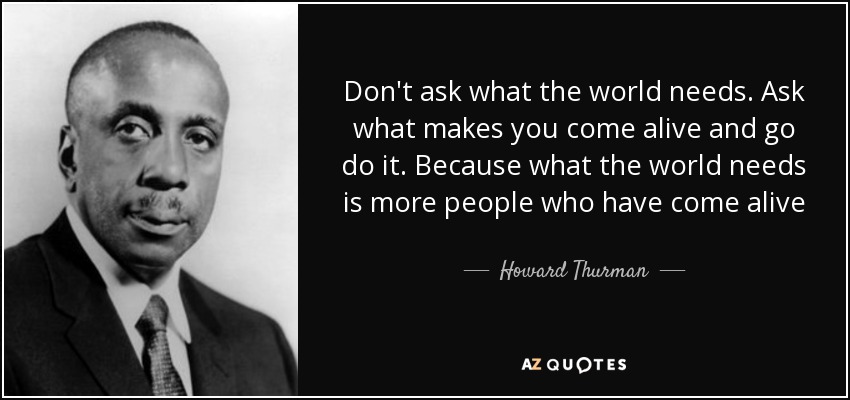
AND to you..
In case you too are at a fork in the road, be it work, a relationship, or whether or not to keep a dog, hear me, yes it is a big decision. I know whatever you are facing, it’s an important decision. It is important because you are important.
Join me, whether for you it is yes or no, find the courage to choose life 🙂
P.S. Hinton is staying. x


