
Mar 22, 2017 | Children, Emotional Wellbeing, Health, Resources, School, Sleep, Uncategorized
Many, many children go through a stage in their development when they don’t like going to bed, and the reasons can be many and varied.
Parents often tell me their children are generally fine and ‘the behaviour’ only begins when it is time to start the bedtime routine.
One dad I spoke to described in detail the battle that ensued between him and his daughter. Her delaying tactics were many and varied (and quite standard repertoire); refusing to go up the stairs; refusing to get into bed; distraction techniques; food requests; drink requests and refusing to sleep without the light on.
He was annoyed that it was such a palava and cross that she wouldn’t just do what she was told and go to bed/sleep.
I have had this same conversation many times with mums too, over the years.
When I asked him why his daughter didn’t like going to bed, he looked at me blankly.
It was a question he didn’t have the answer to.
He had never stopped to find out.
 Like so many parents, he was getting sucked into the ‘bed-time-battle’, thinking that this un-cooperative child was the foe to be avenged, for the prize of a quiet evening and some child-free time.
This picture is so common it is scary.
Scary? Because it means there are so many children resisting going to bed for reasons only they know. If no one else knows then they are not being understood and not being helped emotionally or practically, they are alone with the thing that is the REAL enemy. Their real challenge.
Solutions and sleep come quicker when parents and children join forces and work together.
I’m sure you have noticed, but the middle of a battle of wills between an adult and child is never a good time to ask the child what they are scared of. If they know you are already wound up (and angry with them) then they will not feel safe to tell you the truth about their anxiety.
 Much better progress can be made if this conversation happens at a time when both adult and child are calm and doing something else together and bedtime is not imminent.
Want to know exactly what to say and how to say it,
to get the breakthrough you both need?
CLICK THIS BOX and get your free version of the script I give to parents.
Communiction Cues to End Bed-Time Battles. Get FREE download here
If you get to the point where your child actually tells you what is bothering them, then YOU MUST UNDERSTAND how brave they have been to tell you. At this point there is one MAJOR MISTAKE parents often make.
MISTAKE: Tell the child there is nothing to be scared of.
Remember your child plucked up all their courage to risk telling you what scares them (if they had found it easy to tell you in the first place you wouldn’t have had weeks or months of bed time battle) and now you are telling them they are wrong or stupid to be scared about that. This leaves children feeling wrong, stupid and still scared – as no one stopped being scared about something just by being told to not be scared. What TO say and do is coming soon in another post. For now just make sure you STOP and LISTEN and really HEAR them and try to imagine what it might feel like for them to have had this fear they have carried on their own and getting lots of anger from you because they couldn’t handle it alone.
Communiction Cues to End Bed-Time Battles. Get FREE download here
Previous Blogs in this Sleep Series
Sleep 101 – Essential Foundations for Good Quality Sleep
Sleep 301 and 401 coming soon!

Mar 17, 2017 | Children, Emotional Wellbeing, Food, Health, School, Sleep, Trauma, Uncategorized
Last week there was a documentary on British TV about children and sleep; a crisis hitting our younger generation.
I’m sure we all know the horrible feeling of not having had enough sleep – it happens to us all from time to time. However, the additional knock-on effects of so many children not getting enough sleep as a regular occurrence, are huge. The consequences are being faced by teachers, charities and the NHS. It is a problem on the increase – referrals to a sleep lab at Sheffield Children’s hospital have increased a staggering 10-fold in the last decade.
The program explored the impact of sleep deprivation. Even just 1 hour of missed sleep, affects alertness, brain function, concentration and problem solving. Some children in schools are functioning up to 2 years behind their peers because of the impact of sleep deprivation. Everyone knows poor sleep will impact emotional regulation and behaviour (whatever age you are), but not everyone knows that sleep deprivation can also lead to weight gain, obesity, and other health issues.
If you missed the 30 min program, I have posted the link at the bottom of this blog so you can watch it on iplayer (UK only I think).
Sleep is an issue I have talked with parents about over and over through the years.
It is becoming a more frequent topic with my adult clients too, so I watched the BBC Panorama program with interest to see what angle the media were going to portray (what comes out of my television is not always information I agree with especially when it comes to topics of children, health or well-being!)
 I was glad they highlighted the impact that screens are having in children’s (and adults brains); how screens stimulate brains and get them more alert. Children are more and more frequently handed a screen to ‘keep them quiet’ while adults get on with other jobs. Whilst the volume of noise coming from a child whilst they focus on a screen may be significantly less (!) their brain is being woken up and stimulated – the exact opposite of the ‘calming’ that parents think is happening. Children who are handed a phone or tablet screen for a bed-time story or allowed to watch some ‘calm down TV’ or videos are actually being handed the very tool that will be causing them to struggle going to sleep.
 Just as a brain is stimulated by the blue light in screens, so other chemicals going into the body can have the same impact. The big factor here are the chemicals known as ‘food and drink’. Children who are given foods with a high sugar content (from glucose or processed carbs) for their evening meal and drinks containing sugar and/or caffeine, are being handed stimulants that will spike their blood sugar and create a bedtime nightmare for everyone.
3 Essential Elements for Easier Sleep
1. At least 1 hour of screen-free time before expecting to go to sleep.
This includes phones, tablets, computers, TV, and anything else that emits ‘blue’ light.
Screens in their many variations are widely understood to be addictive. If you have created a bedtime-screen routine for you or your children, that is based in addiction then of course it will be ‘interesting’ to change the habit. It will be your decision whether to try the ‘cold turkey’ approach or a slower ween. Either way it will be totally worth it for the better sleep from having a brain that is ready to slow down and rest without the stimulation of the blue light.
2. From after school no sugar-fueled ‘food’ or drink.
Too much sugar in the blood triggers the production of too much cortisol…which again adds to the stimulation in the body. Cortisol is a stress hormone that sends a message to the brain that we need to get ready, stay alert because ‘we are not safe’. No one found it easy to go to sleep harbouring a feeling of not being safe. It is against our primeval survival coding.
3. Choose carefully what you focus on before sleep
It seems obvious to say, but arguments and tension, anxiety and fear never help as pre-sleep factors (and yet so many parents think that shouting and raising everyone’s stress levels until a child submits, is the best way to go). Quiet colouring, listening to a story CD, reading a ‘real’ book, writing, drawing or talking about any worries from the day as well as things to be grateful for from the day and things to look forward to tomorrow, are all ways to slow heart rate down, calm the brain and get the body ready for sleep.
For many children and adults, these 3 factors alone can make a huge difference to their ability to go to sleep at a reasonable time, and improve the quality of sleep that follows… and the level of functioning the following day.
Do you know a challenged sleeper?
Have you tried these?
I’d be interested to hear how you got on…
For children who still struggle, even when all these foundation factors are happening regularly – it can be time to explore sleep concerns level 2. These weren’t covered at all in the program, and I’ll be writing about them next…
If you want to see the program for yourself click below.


Feb 6, 2017 | Emotional Wellbeing, Health, Real Life Stories, Trauma, Uncategorized
Sometimes things don’t work out the way you planned…
As many of you will know, Hinton has been a big part of my life for the last 16 months (make that 20 if you want to include the 4 months of crazy excitement and preparation from decision day until he actually arrived!!)
The plan was; be a puppy socialiser, and learn everything I can about that experience, then when he goes on to the next stage of his training to be an assistance dog, enjoy perusing my options and consider whether I
- a) want to socialise another puppy
- b) want to get a pet dog
- c) have had enough of dogs through this chapter of life and am happy to move on to life’s next adventure dog free..
As I chose to take time to have a sabbatical from my clinical work, I knew I would need a stop-gap. Hinton was to be my sabbatical ‘project’. (Unbeknownst to me he was actually born on the first day of my sabbatical).
 He was a project.
And some!
I could write a book about everything I have learnt.
However, this post is not about any of that, it is to let you all know that that plan; my plan, isn’t happening.
Hinton is being withdrawn from the charity’s training program due to the challenges he has with his health. Now, if you are like every other person who I’ve told that to, your next thought will be
‘so are you going to keep him?‘
And there it is.
The question that was SO BIG to me it ground me to a halt for a few days. I’m not exaggerating. To you it may seem strange, but I was overcome by the enormity of the decision… a decision I had never planned on having to make…the life-changing impact of something I had to use my voice to choose what next…
Sometimes life happens to us.
Sometimes we need to use our voice to choose life.
I am grateful to have some people close to me who appreciated the bigness of my decision and gave me space and time to explore it from every angle. If we have experienced trauma of any kind in our past then it can be easy at times like this to take cover in our favourite survival pattern – run away, argue or hide and wait for it all to go away. Have you noticed what you do?
This decision needed to be made, and while I certainly had wisdom enough to put some self-care boundaries around it, to take the time I needed to make it, it had to be made. The decision wasn’t going anywhere. I had to get myself grounded, moving, thinking and processing and listening to my head, my heart, my spirit, my fears and my desires.
These are the things I asked myself to help come to my decision.
- What do I love in life ? What are my core passions, my values, the things that bring me life?
- Does this change support me in being more me or less me?
- Does this change mean I will grow forwards to new or go back to the old?
- Do I feel what I am letting go of, has grown me or shrunk me?
- Will the future I choose to move into grow me or shrink me?
- What about this scares me? (Acknowledging that there is fear or that something is hard, doesn’t mean you don’t do it – you just get more clarity about the root of the fear and power to overcome it).
- Do the positives outweigh the negatives? Or do the positives carry MORE WEIGHT than the negatives?
- Am I ready to be responsible for me and the development of my life?
- Am I ready to choose life?
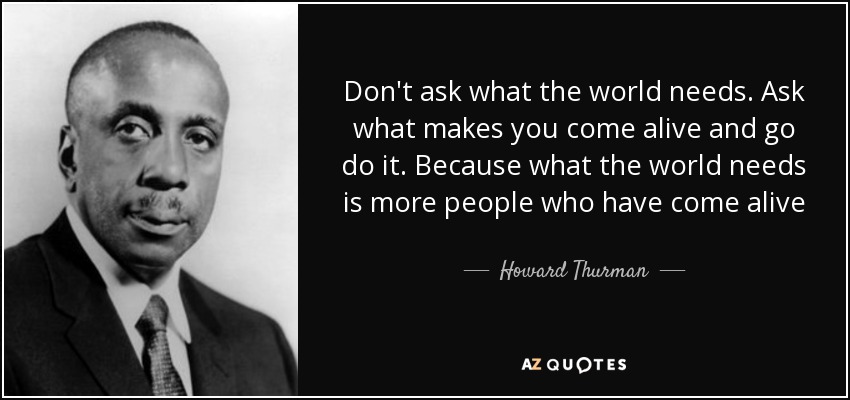
AND to you..
In case you too are at a fork in the road, be it work, a relationship, or whether or not to keep a dog, hear me, yes it is a big decision. I know whatever you are facing, it’s an important decision. It is important because you are important.
Join me, whether for you it is yes or no, find the courage to choose life 🙂
P.S. Hinton is staying. x

Jan 26, 2017 | Children, Emotional Wellbeing, GROUNDED, Health, Inspiration, Real Life Stories, School, Uncategorized
We all know that being around challenging children is HARD. Being involved in their lives means that we have a significant role we are playing – and yet it can sometimes mean we think that to be doing a good job we have to keep it all together and not let others know how hard we are finding it. We can be honest – but only a bit…

I wrote this several years ago, when Hinton was 9 months old. I wrote it for me and never intended to share it – but have decided I would, in case it resonates with anyone else out there doing significant work and finding it HARD right now.
HINTON DIARY – 9 Months
“So I cried today in a room of women and four-legged furry beauties.

Why?
I was done.
‘My furry boy’ is a real challenge at the moment – in ways that no one knows if they just look at him.
In fact if you just look at him, you would say how gorgeous he is, and you would want to touch him (EVERYONE wants to touch him).
You would have no idea about what it is really like living with him at the moment. The stubbornness, the independence, the inescapable attraction for anything new, how unbelievably strong he is when he wants something, and then there is the sensitive tummy, sensitive temperament and unpredictable VERY mushy toileting.
My ‘boy’ is 9 months old and a real conundrum in so many ways.
I’m not just saying it. He has had his trainer scratching her head more than once.
We went to our regular socialisers puppy class today.
It was clear to the trainer as soon as we arrived, that I needed some extra support and I didn’t deny it.
The trainer took him and I sat there with tears pouring down my face. Exhausted.
It turns out that some dogs are like this when they hit teenage stage.
It turns out that they are not all this hard, but some are.
It turns out that in some ways he is very normal.
It turns out that in some ways he is very different, and not all the standard ‘normal’ approaches are helpful for him.
It was lovely for them all to notice and comment on the good bits they see in him (he can do rocking sits and downs when he has a mind to, waits and stays are there too, and I think the stories of how he now copes with being handled, poked and prodded which he totally HATED a few months ago, actually really impressed them).
And that is it, the conundrum. He is not all bad. Not by a long shot. I wouldn’t swap him for any of the other pups. He is ‘my boy’ [for now] and we are going to work this through together, we will both be changed by it, and come through wiser.
That is where we are going. But to get there I needed today.
- I needed to be around the wisdom of others who ACTUALLY KNOW what it is like being a puppy socialiser.
- I needed to hear encouragement from others who ACTUALLY KNOW what it takes to be a puppy socialiser.
- I needed to hear and receive affirmation of the good job I am doing with him from people who know the investment of time, energy and life it takes to train a pup like this.
- I needed time out – even just a few minutes – of not being on the end of the lead, to regroup and get myself into a calm state again. Time to look at him from a different perspective and realise there was no other puppy in the room I would want to take home instead.
- I needed to hear from people who are more experienced than me, that being at the end of myself did not mean I was a poor socialiser in anyway.
- I needed to hear stories of the depths that others (who seemed to have it all together and appeared to know what they are doing) have been to with puppies they have socialised in the past – and to see one of them sitting there with the very same puppy, now calm and in control of himself, happy, snoozing and ready for the next stage of training.

And he needed time away from me.
Right then, he needed time being handled by an expert.
He needed support from someone who was calm and grounded, who could help him move on through those minutes in a positive way.
It takes a village to raise a child apparently.
It surely takes a community to raise an assistance puppy.
So as I am writing, we are home now. He is asleep by my feet.
Still gorgeous. Still a teenager. Still so much toddler.
Socializing an assistance puppy has to be up there with some of the hardest things I have ever done.
But I’ve heard many parents say the same about parenting.
I’ve heard many teachers say the same thing about teaching.
I am SO grateful for the support and expert training I have around me. While everyone wants to throw their two pennies worth of opinion at me – I know who I am choosing to listen to. I am learning so much about dogs, about people, about me, and I have chosen to change and grow through it all… Socialising my first assistance puppy IS an adventure and I’m not done yet.”
SO from one honest heart to another – let me ask you these 9 questions:-
- Are you doing something significant?
- From 1-10 how hard is it at the moment?
- What is hard about it that no one else would know from the outside?
- Do you compare yourself with others who appear to have it all together?
- Who would you need to hear positives from to really receive and believe what they are saying?
- When was the last time you had ‘time out’ away from those children?
- What are the specific positives or developments that you can see are still in your children, even in the midst of a challenging phase?
- What emotional support do you need?
- What specific expert support do you need?
Want to be the first to know when my next online workshop for parents (of human children) is happening? Get yourself on the ‘let-me-know list’. CLICK HERE

Jan 6, 2017 | Emotional Wellbeing, Health, Inspiration, Real Life Stories, School, testimonial
This just came in from one of the senior teachers I have been supporting. It is shared here with permission.
Everyone’s story is different of course – and if you are curious to change yours then please get in touch.
“Hi there
I just wanted to send you a few words that sum up what happened to me.
I could have gone on about my visits to the GP, photographing my swollen joints and rashes so the GP didn’t think I was making things up, it’s quite funny now I’m ‘fixed’ – although it wasn’t at all funny at the time ….. Especially as it was also suggested at one point that my symptoms were psychosomatic…

In 5 months I’ve forgotten how debilitating it can be to have:-
- intermittent Vertigo,
- swollen joints that were so painful I couldn’t move them,
- tendons that pulled my fingers in to make a claw,
- unexplained rashes
- and the need to stop driving to have a sleep on the way home from work.
When you work in a school it’s easy to think feeling unwell is an inevitable symptom of stress and part of getting older! But the changes I have experienced since taking the USANA products you recommended have shown me it’s not stress or getting older, it’s nutrition. I just wasn’t getting enough of what my body needed.
I noticed a difference within 2 days of taking the nutritional supplements. Honestly, for me it was that instant.
I’m massively thankful.
It is just so incredible to be several months on now and pain free, sleeping better than I ever have, waking up more easily and not needing to spend 15 mins in the shower every morning trying to make my eyes open. I have more energy and mental clarity and I know I am more ‘on my game’ at work than I have been in years.
Thank you again.”
Inclusion Manager

If you want to explore what might help you thrive then get in touch.
Also check out
Nutrients Helping Children thrive testimony from adoptive parents
Nutritional deficiency and children’s behaviour how nutrients changed a pre-schooler and his family
Improving Immune strength what another teacher noticed

Mar 24, 2016 | Children, Emotional Wellbeing, Health, Real Life Stories, School, testimonial
Dear Headteacher
Before I get on with follow-up emails for everyone I saw this morning, I wanted to take a moment to write and officially thank you.

I want to thank you for the way you are choosing to lead your school.
Thank you for making time and allowing your staff to have access to training around Essential Health and Safety – the real things everyone needs to know if they are working in a school.
Thank you for allowing them to have time and space to consider themselves in the busyness of school life, and especially end-of-term-itis.
Thank you too, for allowing me to provide initial, confidential follow-up chats with all those that wanted them – during school time.
I recognise that not many other schools out there are doing this, and yet you are making decisions based on your children’s best interests – and you understand that that inherently means the well-being of your staff first and foremost.

I know this way of working may seem like a somewhat ‘different’ approach, as many schools are expecting their staff to cope with the stress, manage themselves, be calm around the children, continue to function at a high level and all without the real information they need to understand HOW to do this.
Obviously what people choose to do with information is their own choice. I just want to acknowledge and thank you for giving your staff the chance to gain more understanding, and have wider choices around supporting their own resilience and well-being.
I thought you might like to know that these comments were all said to me in the 1:1s yesterday and today, or in emails since then:-
“I am so grateful to have this time to think about myself…”
“Just talking to you now I realise that….”
“What you were talking about the other day really connected with me, and I am so glad you are still here to help us with support if we want it – you haven’t just abandoned us.”
“I know it is time to make some changes…”
“That’s a really good idea – I think I could do that…”
“That other lady you were talking about last week…the teacher… I got all of that… she was just like me.”
“That quiz you gave us really made me stop and look at what is happening… what it is like for me.”
“Thank you so much for your time and help.”
“Thank you for spending the time with us all over the past couple of days – I know people have found the discussions valuable. ”
“After our talk I went home and had a really honest conversation with….”
“Thank you for your support – I already feel more positive.”
“Thank you for my session today. I really enjoyed chatting to you. I will have a look at the extra info you have sent me and be in touch asap to take the next step.”
We all know that who we are as people is what makes the biggest impact on the children. I am thoroughly grateful to be able to partner with a school like yours. Children, Health and Emotional Wellbeing ARE all connected and I know you understand this.
I look forward to the ongoing journey we will all make together.
All the best
Claire Wilson
Clinical Director
CHEW Initiatives
Children, Health & Emotional Wellbeing…. because it’s all connected.
www.chewinitiatives.com

 Like so many parents, he was getting sucked into the ‘bed-time-battle’, thinking that this un-cooperative child was the foe to be avenged, for the prize of a quiet evening and some child-free time.
 Much better progress can be made if this conversation happens at a time when both adult and child are calm and doing something else together and bedtime is not imminent.


